Last weekend, having discovered that Grindelwald was a place, not just a Harry Potter character, I found myself heading to the Swiss ski resort.

The Ski Club of Great Britain (SCGB) had asked me to be the substitute for an injured colleague, and take a holiday group to the resort – shortly after they had persuaded me that “Grindelwald” actually existed.
It turns out that along with Wengen and Murren, Grindelwald is one of the three main towns in the Bernese Alps that make up the Jungfrau Ski Region – a region that hadn’t previously hit my skiing radar either. I did some research and found out what I had been missing.
Being a veteran skier with over 30 resorts under my belt, it seems remiss of me to have ignored a region of such historical importance to alpine skiing. I concluded that It wasn’t ignorance alone, but socio-economic factors that had led me to blank the Jungfrau out.
Swiss resorts have long been the preserve of wealthy blue-bloods and often of royalty. Along with Wengen and Murren, many own places in Davos and Klosters and generally move in different circles to those I frequent back in England. I’ve never been able to persuade my bank account, let alone any of my friends from serfdom to go skiing in Switzerland. If it wasn’t for the SCGB subsidising me I’d probably never have skied any posh Swiss resorts at all or met anyone who had and could tell me about them.

Grindelwald is nestled in the valley just below the North Face of the Eiger – a mountain that, thanks to Clint Eastwood, I had heard of. Breath taking scenery spreads out in every direction, but mostly upwards. The Eiger (3970m) is shadowed by its neighbours, the Monch (4107m) and the actual Jungfrau mountain itself (4158m) on which a restaurant and viewing platform have been built.
The building claims to be “The Top of Europe” by its marketing literature. I did point out to a local that Mont Blanc was in Europe and when last measured, was 4801m and therefore significantly loftier. Apparently “top of Europe” refers to the fact that it is the highest point accessible by railway in Europe.
The cog railway built in 1902 links the three resort and burrows its way through the Eiger to the “The Top of Europe” for seemingly no practical purpose. How did its builders plan to get a return on their investment, given that in 1902 alpinism hadn’t really taken off and the local farmers presumably weren’t interested in taking summit selfies?
In 2020 Grindelwald installed the Eiger Express, a monster gondola cable way, which takes you up to the Eiger glacier in 15min, so few skiers catch the cog railway up anymore. Although we did once for the novelty value.

The Jungfrau is undisputedly the embryonic home of skiing. Victorian aristocrats, who were very fond of forming Clubs, both in the Alps and in London, pioneered the sport of skiing. In a time before ski lifts and piste bashers were invented, the Jungfrau must have been popular because of the railway. “Build it and they will come”, must have been the constructor’s philosophy.
First the Kandahar Ski Club was formed in Murren by legendary wooden plank skier Arnold Lunn in 1924. Named in hour of his father who fought for the British Empire in Afghanistan, the Down Hill Only Club (The DHO) was formed in Wengen a year later to challenge the Kandahar boys to a jolly good ski race. Out of this, the oldest and longest amateur downhill race, the Inferno, was born.
The DHO name, was probably a dig at the Kandahar Ski Club who still needed to skin-up the slopes before skiing down them, the Murren railway station being below the skiing area. Both the DHO and the Kandahar Clubs now have their own ski schools/instructors and youth academies. And they now accept membership of any nationality or social background. The SCGB, was formed in London earlier than the DHO in 1902, by the very same Arnold Lunn. He really was ‘Mr Ski’ back in the late 19th century.
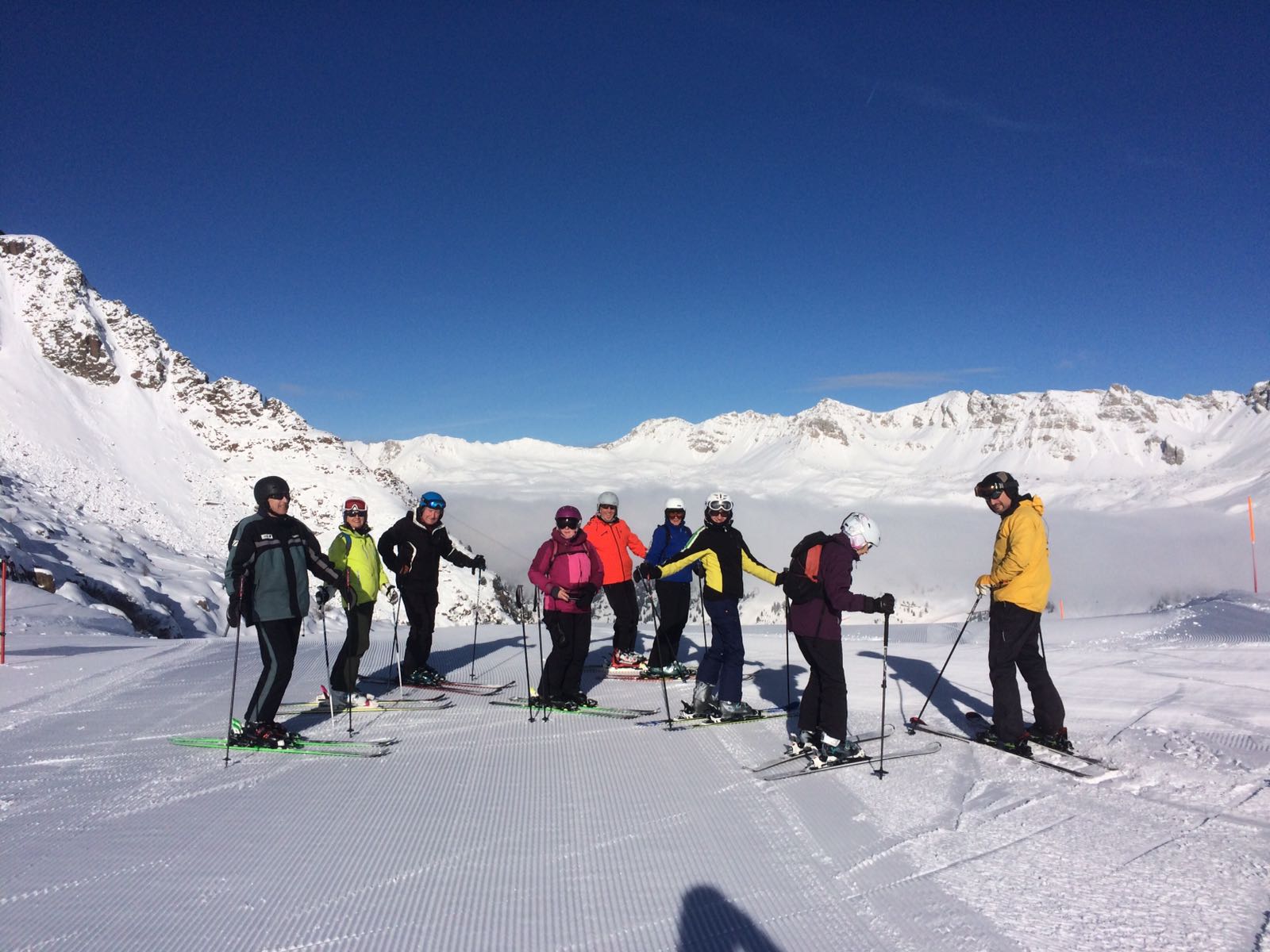
Not only has the SCGB taken me to places I’d never ski independently, it has introduced me to many folks from a range of diverse backgrounds. Although it must be said, most are middle aged and ski with a club because they don’t have anyone else to ski with. Either their spouse doesn’t ski or at least not anymore, and their friends have physically decayed more rapidly and stopped skiing. On my trip to Grindelwald the average age of the members skiing with me was 59!

Despite our collective age, we did all manage to ski the Lauberhorn World Cup run down into Wengen. It is the longest downhill race on the World Cup circuit (4.4 km) where racers often hit 100mph on the straight section. None of us managed to beat the course record of (2mins 24s), but then we did stop for coffee half way down.
I hope the SCGB sends me back next season. I really enjoyed Grindelwald, mostly because of the Jungfrau’s history but possibly because it was too expensive to get drunk, and unusually my skiing was unimpaired by hangovers.





 I’ve always disliked having skiing lessons. They seem to serve only one purpose – to destroy the self-image I manage to restore after my last lesson. That image is one of a ‘good skier’ who can ski down most things without falling over.
 Unfortunately, not even the SCGB can control the weather. It hadn’t snowed in Meribel for two weeks and the off-piste element of the course became a master class on how to ski moguls.
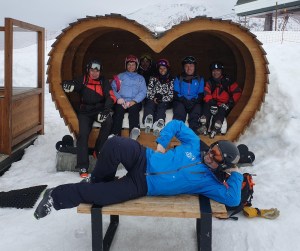 The 3 Valleys were as I remembered them. The Russians in Courchevel were still beautiful, the buildings in Val Thorens were still ugly and everywhere was still eye wateringly expensive. The pistes were still full of kamikaze youth treating slower skiers like slalom poles, with scant regard for their safety. Despite feeling like I had a target pinned to my back, I found the slopes less intimidating and this time they were mercifully free from ski demons.
 Not long after the wheels touched the runway at Geneva, I got the text – “Meet Vaffieu 2pm”. The typical Savoyard mountain restaurant at the top of the Pleney nursery slopes is famous for its tartiflette and infamous for its flirty tarts.
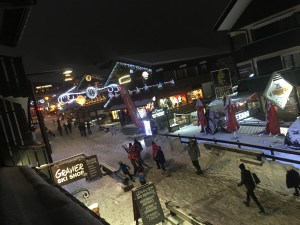 We were staying in the centre of town on the Taille de Mas – Morzine’s version of the Las Vegas strip. Whilst possibly a bad place to stay for an undisturbed night, we would be making most of the late night noise, so it didn’t matter. Worryingly, the flat was directly opposite the Buddha Bar.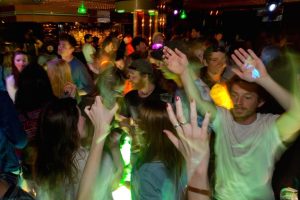
 And every night seemed to end in the Buddha. Every morning I’d wake up with my head spinning but grateful that the après aliens had deposited me in the right bed. I’d wonder how on earth I managed to function when I was a chalet host. After many a similar evening, I’d get up at 8am, fetch bread, cook breakfast, wash up, excavate Landie then drive my guests to the lifts. I’d even ski with them some days!


![95998160 [Converted]](https://skiingwithdemons.com/wp-content/uploads/2018/09/msf-logo-closed.jpg) It’s September now and the calls are coming in. It seems that everyone is now thinking about booking skiing accommodation. Of course if you want to ski this New Year or half term, you are already too late to book anywhere and you may want to review your decision to have had children.
It’s September now and the calls are coming in. It seems that everyone is now thinking about booking skiing accommodation. Of course if you want to ski this New Year or half term, you are already too late to book anywhere and you may want to review your decision to have had children.


 Once I’ve got the soggy rodents home, the chalet turn in to a laundry with every available drying surface strung with damp garments. If there is a reward for going skiing in the rain, it’s that it amplifies the feeling of being dry, warm and safe once you finally back by the fire, sat in dry underwear. I’ve noticed that many of skiing’s rewards come post activity – such as the unadulterated pleasure you get when you finally take your boots off. I often think that the sole purpose of skiing it to experience that moment.
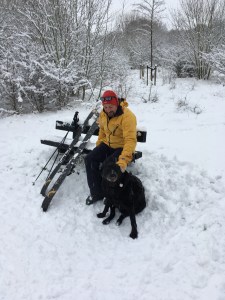

 Being an electrician, like skiing, involves meeting lots of unusual people from a wide socio-economic background and often in a domestic setting. Instead of vin chaud, I make small talk over mugs of tea which is altogether safer. Instead of sitting on a chairlift I field the groundhog questions while standing on my ladder; “where are you from?”, “got any kids? etc. etc.” to which I’m equally tempted to invent answers.
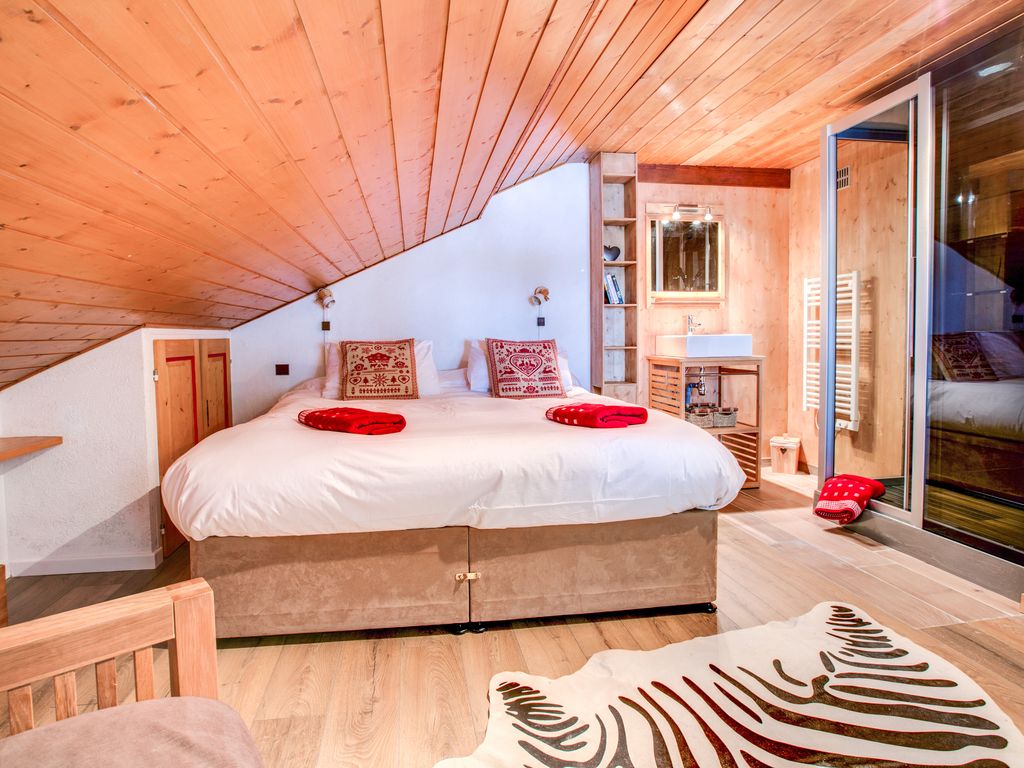


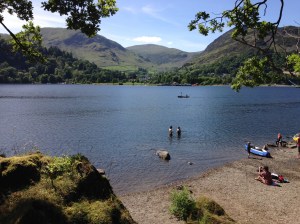
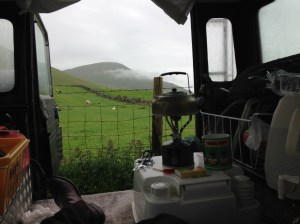

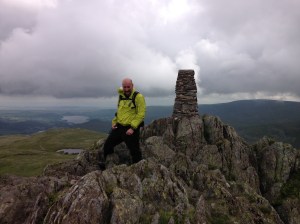
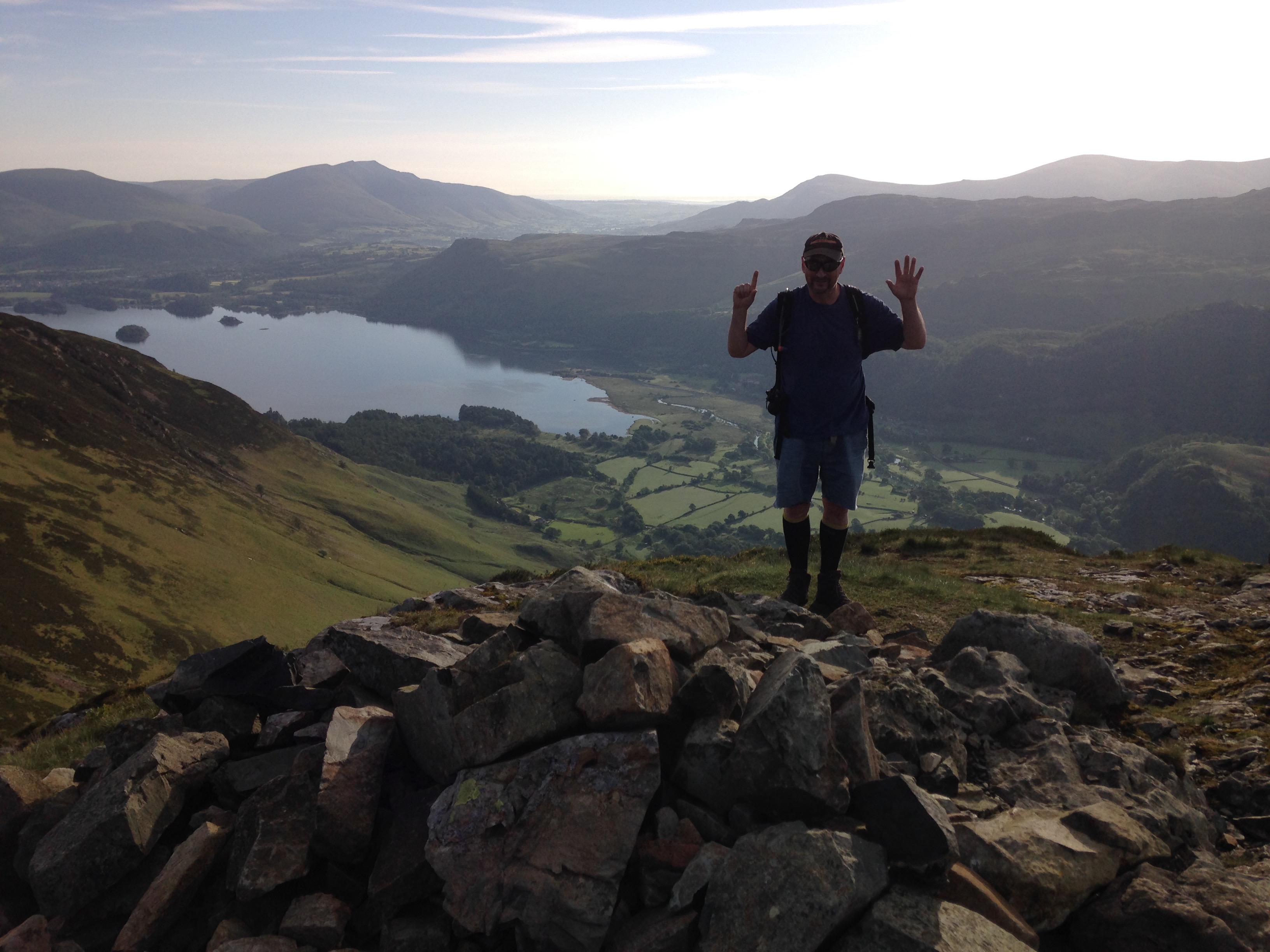
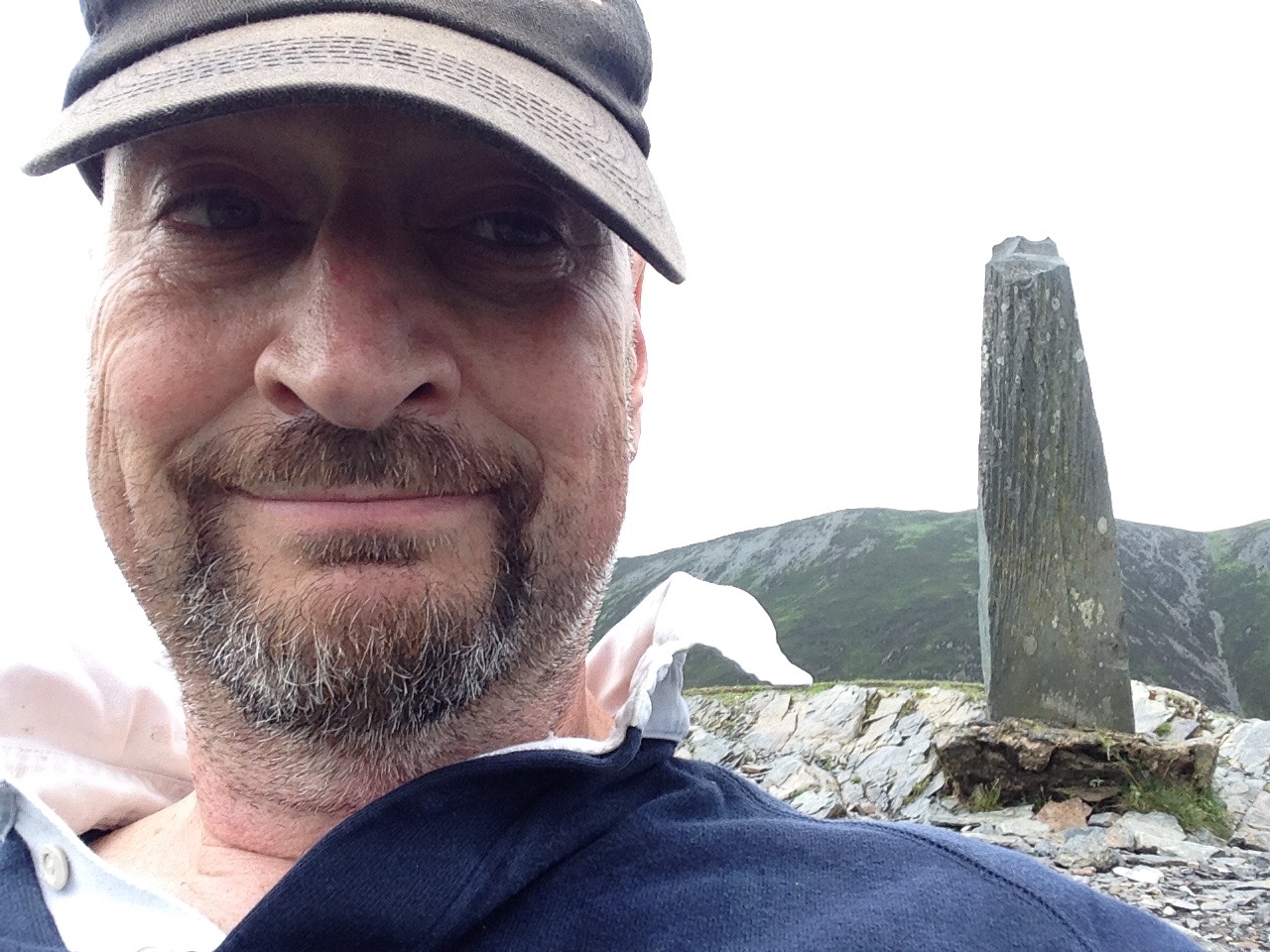 After a couple more days of Wainwright bagging, I got tired of not being able to stand up in my accommodation. When you get to a certain age, there are some things you can only do standing up – like putting your underpants on. So I cheated and stayed with friends near Keswick – it’s important to have friends in the North.
 We watched the sun rise over Derwent Water from our magnificent viewpoint and mused about life. Then, for the best part of five hours, we greeted and triaged some 200 fell-walkers in various states of distress. An independent solo walker, who had clearly picked the wrong fell on the wrong day, stopped too and exclaimed, “I came up here to get away from people!”


 Realising what I’d done, I apologised and tried again in Franglais. I gave him the tracking number and he typed it into his computer, then gave me the French equivalent of ‘the computer says no’. I showed him the email proving “Le carton, was dans la maison” “Maybe we will deliver it tomorrow?” – he said, accidentally reverting to English.

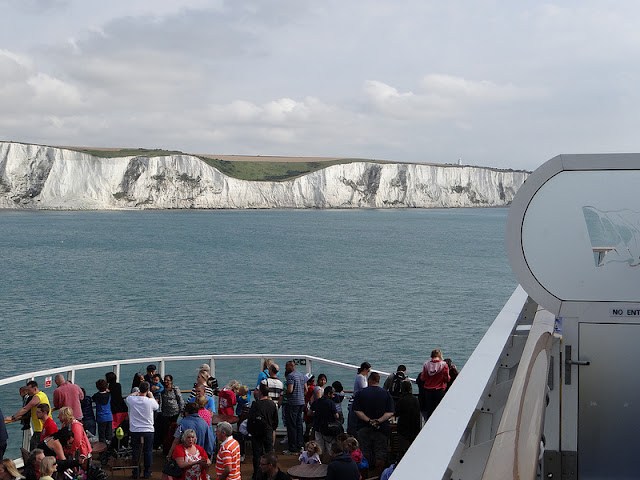 Once Calais fell, I pulled into the EU citizens queue at the ferry port. I wondered if post-Brexit there could be three lines: one for non-EU citizens, one for EU citizens and one for Remainers?


 Chris Tomlinson
 Skiing With Demons